INSIDE THE CAVE
Inside the Blue Cave: light, swim and snorkel
What the Blue Cave is like inside, why its water looks blue, and what the beach and the snorkelling around the entrance offer, from Triton's information and published science. How the swim is organised on the day is explained by the guide on board.
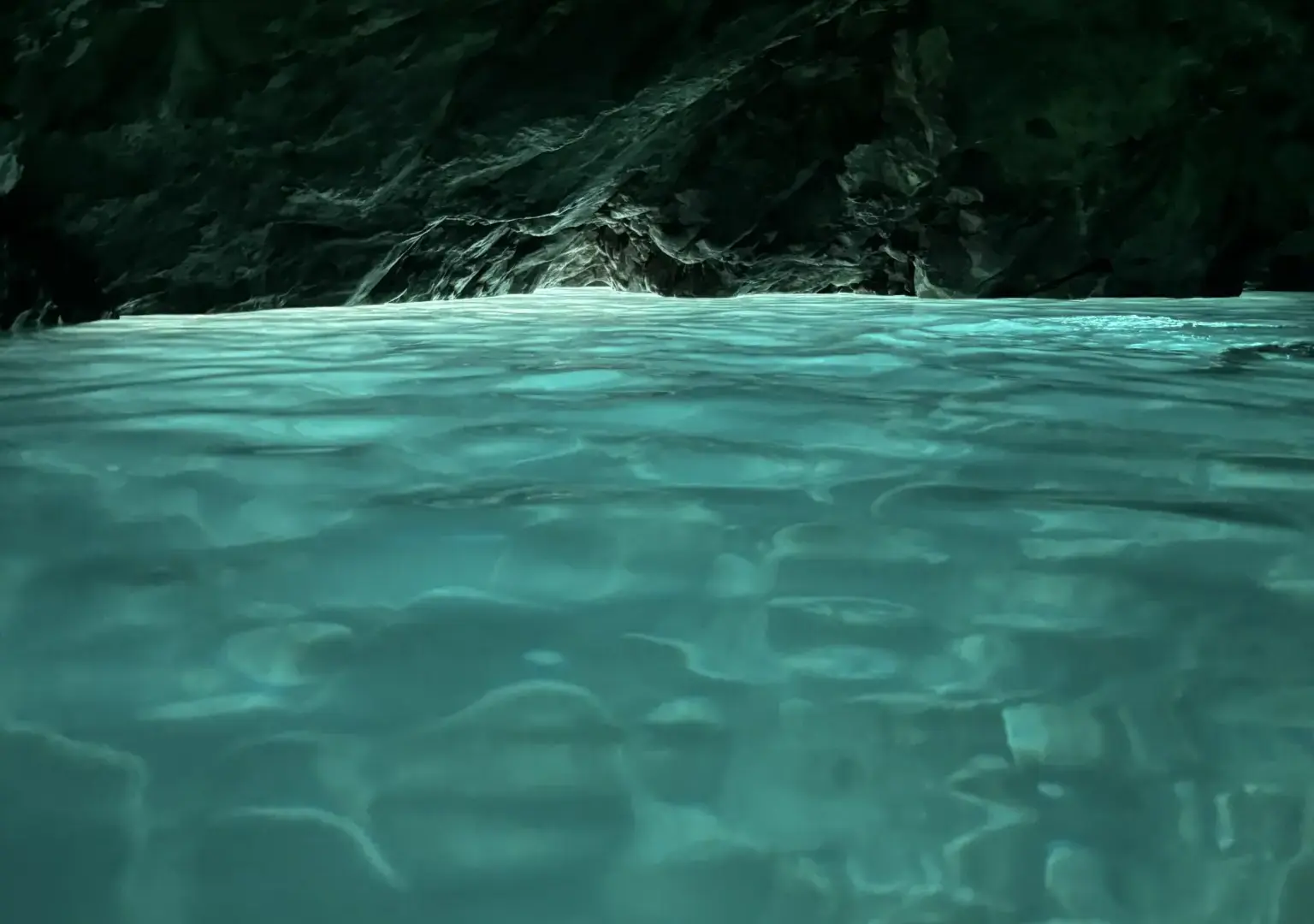
Why does the water look blue inside?
Because of daylight and the water itself. Triton describes sunlight making blue reflections on the clear water and the limestone walls. The physics behind the colour is well established: water absorbs the red end of sunlight first, so light that has passed through several metres of water looks blue.
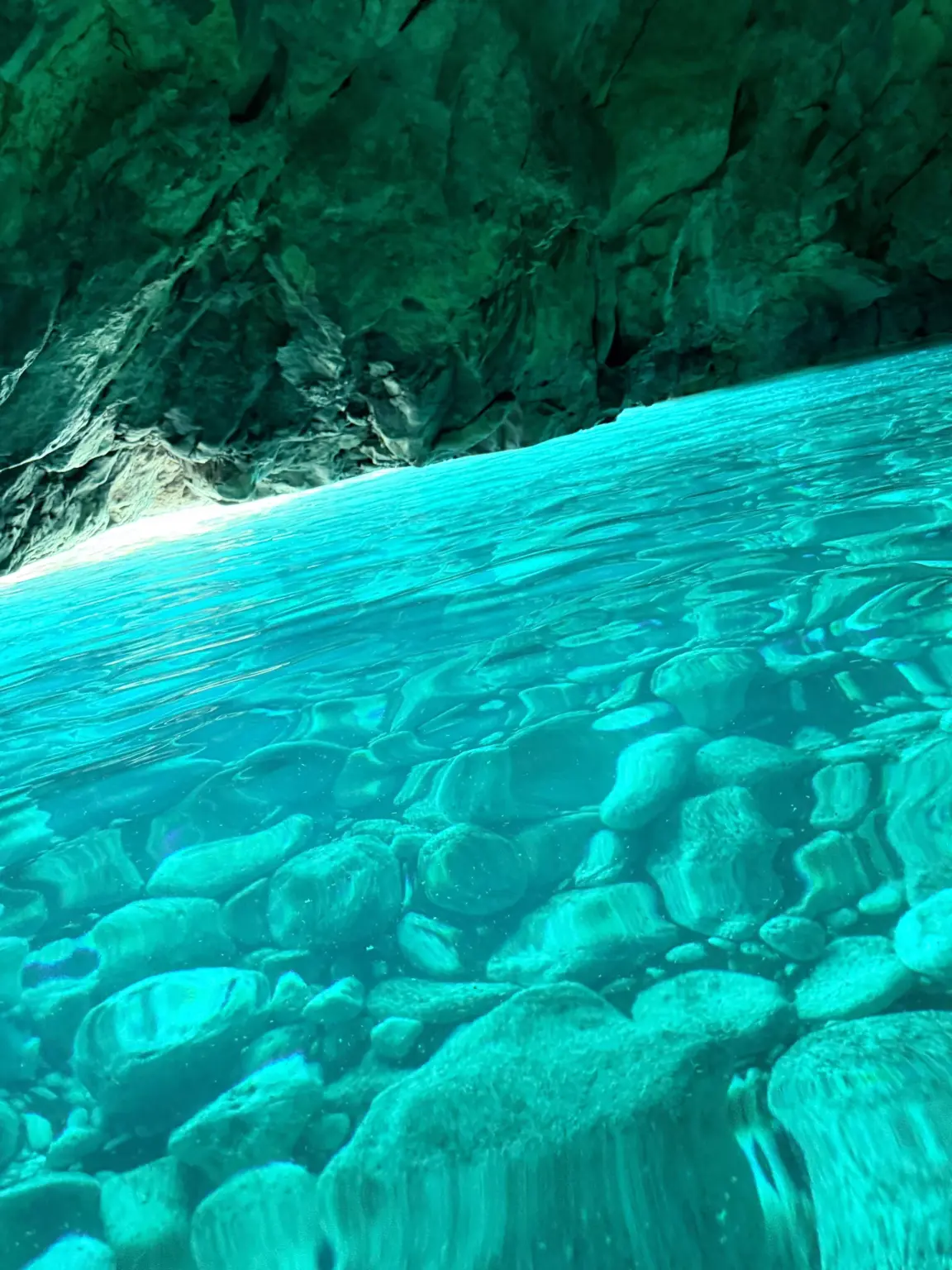
No study has measured this cave, so this guide does not say where the light comes in or name a best hour. Triton's advice is about conditions rather than the clock: the colour depends on the sun and the sea, and the crew plans the route with both in mind.
Can you swim inside the cave?
Yes. Swimming inside the Blue Cave is part of Triton's stop, and swimming is allowed there. Triton gives about 45 minutes at the cave for a break, photographs, swimming and snorkelling. How the group gets into the water, and where to swim, is explained on the spot by the guide on board.
What is the beach at the entrance like?
Triton describes a sheltered pebble beach at the entrance of the cave, used for swimming and snorkelling, and OpenStreetMap maps a beach called Plazhi i Llovizit on this part of the coast. No source records any facilities there. With about 45 minutes at the stop, the beach is a place to pause between swims.
What is the snorkelling like?
Triton names the water around the cave entrance as its snorkelling spot, with rock formations below the surface, and the tour's Classic Package includes snorkelling equipment. What you see depends on the day's sea and light, so this guide promises no particular fish and no visibility figure.
How should you treat the cave?
Look, take photographs and leave everything as it is. The marine park's management plan (final draft, 2014) names caves and cliffs among the features to protect on this coast, together with the coralligenous rims built by a protected alga, Lithophyllum lichenoides. Keep your hands off the rock, take your rubbish back to the boat and follow the guide's instructions.
Which other caves are on this coast?
Many, according to Albania's National Agency of Protected Areas, which describes the western shore of Karaburun as cut by caves and deep canyons, most of the caves underwater and often fed by freshwater springs. It calls these hard-to-reach places ideal habitat for the Mediterranean monk seal; no sighting is promised at the Blue Cave.
The same tour starts at Haxhi Ali Cave, a listed natural monument, and ends at Grama Bay, which has a cave of its own. The Blue Cave is not on Albania's list of natural monuments.